
Introduction:
Education today is evolving faster than ever, and parents now look beyond academic scores when choosing the right school. They seek an environment that nurtures the mind, body, and character of every child. At BGS Vijnatham School Tirupati, One of the Best Schools in Tirupati—the focus is on offering students more than traditional textbooks. Children here are encouraged to explore creativity, build sportsmanship, interact with peers, and engage in real-world experiences that strengthen confidence and overall personality.
Across the country, many forward-thinking institutions stress the importance of holistic development, with structured exposure to art, sports, and co-curricular clubs. BGS Vijnatham School stands out for embracing this philosophy wholeheartedly, ensuring learning extends meaningfully beyond classroom walls.
About Us:
At BGSVS, we believe that education extends beyond academics to nurture confident, well-rounded individuals. Our school champions a rich ecosystem of art, sports, and clubs that inspire creativity, resilience, and collaboration. From vibrant visual and performing arts programs to competitive sports teams and diverse student clubs — including robotics, music, drama, and eco-initiatives — every learner finds a platform to explore and excel. We conduct regular inter-house competitions, cultural fests, and community showcases that celebrate talent and encourage healthy participation. Through these activities, students not only build skills but also develop leadership, emotional intelligence, and self-assurance. Our commitment to holistic growth ensures that each child becomes a confident, socially aware, and capable individual ready to thrive in a dynamic world.
1. A New Era of Education: Why Holistic Growth Matters
The needs of today’s generation are drastically different from the past. Children are growing up in a highly competitive, technology-driven world where success depends on innovation, adaptability, communication, and problem-solving ability.
Traditional rote learning alone cannot prepare students for these challenges. The focus today is on:
- Creative learning
- Physical and mental well-being
- Social awareness
- Life skills and leadership
- Emotional intelligence
- Teamwork and collaboration
That’s why co-curricular learning is a core component in the curriculum of forward-thinking institutions. These experiences strengthen personality traits, enhance confidence, and help children discover their hidden potential.
2. The Transformative Power of Art in Student Development
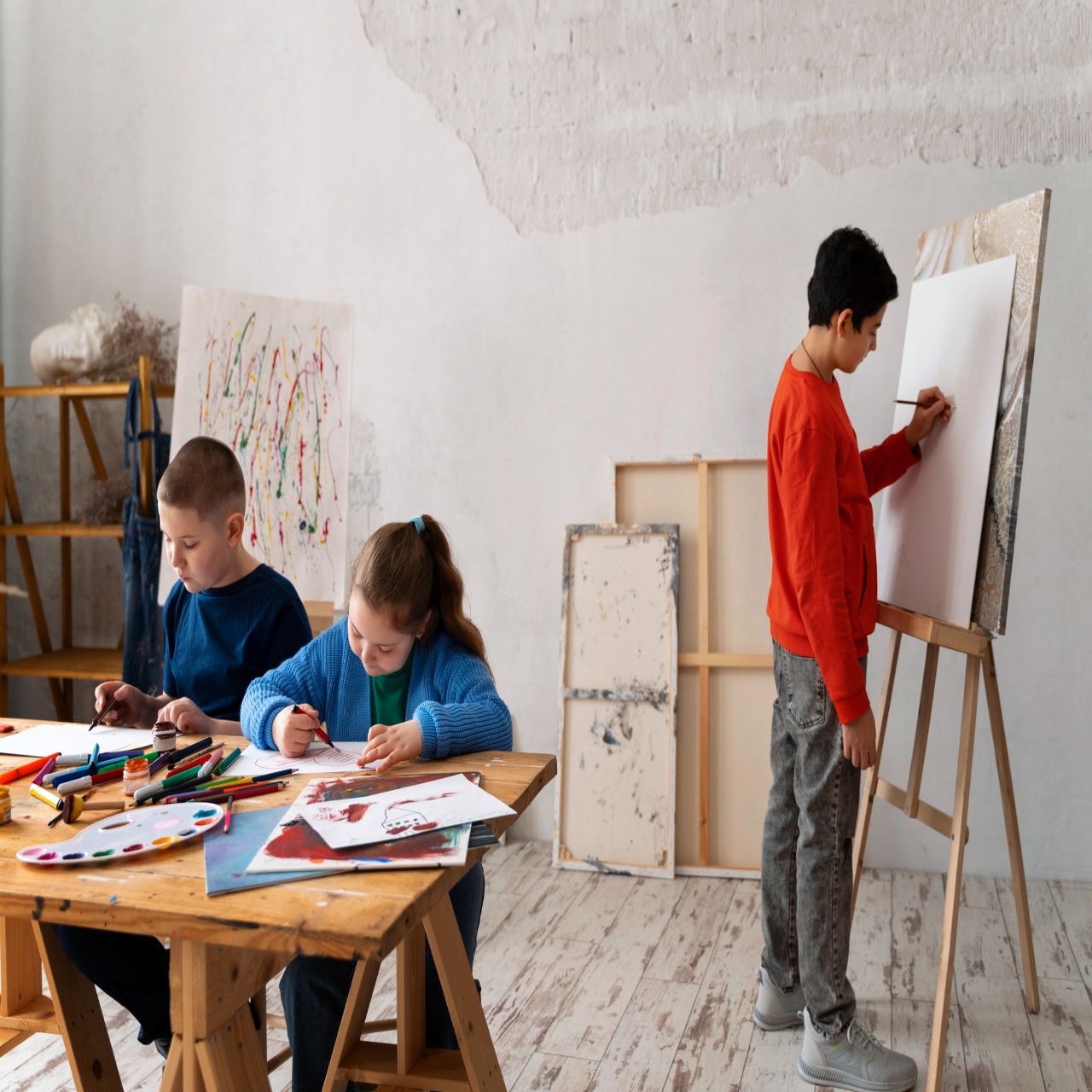
Art is not just an extracurricular subject—it is a language of expression. It allows children to explore their imagination, communicate feelings, and build a deeper sense of self-awareness.
Schools that value creativity provide platforms for students to participate in visual arts, music, dance, theatre, and craft. Each of these disciplines contributes to emotional balance and personality development.
How Art Shapes Confident Individuals
a) Enhances Creative Thinking : Exposure to artistic activities encourages students to think in non-linear, innovative ways. Whether sketching, sculpting, or composing music, each activity strengthens the ability to imagine, analyze, and create.
b) Improves Emotional Expression : Art offers a safe outlet for children to express feelings they may not be able to verbalize. This improves emotional resilience, self-reflection, and mental well-being.
c) Builds Confidence Through Performances : Stage exposure, exhibitions, recitals, and competitions help children overcome hesitation. Showcasing their work instills pride and boosts self-esteem.
d) Strengthens Fine Motor Skills : Drawing, painting, and crafting activities support motor development and visual-spatial skills, especially in younger children.
e) Encourages Appreciation of Culture : Art education often includes traditional dance forms, classical music, and folk arts, helping students appreciate cultural diversity and heritage.
At BGS Vijnatham School, art is deeply integrated into the curriculum. Students are encouraged to explore various art forms through dedicated spaces, workshops, art festivals, and performances that nurture their creative identity.
3. Sports Education: Building a Strong Body and Stronger Character
In the fast-paced academic environment, sports play a crucial role in balancing mental and physical growth. Regular participation in physical activities enhances stamina, agility, and concentration.
Well-established schools also emphasize sports as a medium to cultivate discipline, leadership, teamwork, and resilience—qualities essential for success in life.
How Sports Contribute to Holistic Growth
a) Improves Physical Fitness and Health : Sports help enhance endurance, strengthen muscles, improve posture, and maintain healthy body weight. Children who play regularly also develop better immunity and energy levels.
b) Instills Discipline and Time Management : Training schedules, practice sessions, and tournaments teach students the value of punctuality, consistency, and commitment.
c) Strengthens Teamwork : Whether it is football, basketball, cricket, or relay races, team sports teach children to cooperate, communicate, respect differences, and work toward shared goals.
d) Develops Resilience : Winning and losing are major life lessons. Sports teach children to handle setbacks gracefully, learn from mistakes, and try harder.
e) Enhances Mental Strength : Sports greatly reduce stress, improve focus, and boost overall brain activity. Active children tend to perform better academically due to higher concentration and alertness.
f) Builds Leadership Skills : Captaining a team, organizing practice drills, or participating in inter-school competitions helps students take initiative, motivate peers, and make decisions under pressure.
BGS Vijnatham School provides structured training programs, experienced coaches, and world-class facilities for games such as athletics, football, badminton, basketball, yoga, martial arts, and more. Every child is encouraged to participate in at least one sport to ensure balanced development.
4. Co-Curricular Clubs: A Gateway to Real-World Skills
Clubs in schools play a fundamental role in helping children explore interests, gain practical exposure, and develop career-oriented skills. From science to literature to robotics, clubs offer a dynamic space for collaboration and curiosity.
Leading schools include a variety of clubs that contribute significantly to skill development. Similarly, BGS Vijnatham School offers a wide range of clubs that encourage active participation and self-discovery.
Types of Clubs and Their Benefits
a) Science and Robotics Clubs : These clubs fuel curiosity and help students engage in experiments, coding, building models, and participating in competitions like Olympiads. Children develop analytical thinking, technological literacy, and problem-solving abilities.
b) Literary and Debate Clubs : Perfect for enhancing communication skills, vocabulary, confidence, and oratory abilities. Students learn to think critically, structure arguments, and express their ideas clearly.
c) Eco and Sustainability Clubs : These clubs promote environmental awareness. Children participate in plantation drives, recycling projects, and awareness campaigns, shaping them into responsible citizens.
d) Arts and Cultural Clubs : These clubs bring students together to celebrate dance, music, theatre, and cultural traditions. They help build a sense of community, belongingness, and creative expression.
e) Mathematics and Innovation Clubs : Activities such as puzzles, math games, and logical reasoning exercises help sharpen analytical skills and develop a love for numbers.
f) Technology and Coding Clubs : In the digital age, coding and tech skills are essential. These clubs prepare students for future careers by teaching programming basics, app development, and introductory AI.
g) Community Service and Leadership Clubs : Through charitable activities, awareness programmes, and social initiatives, students learn empathy, responsibility, and people-management skills.
By participating in these clubs, students gain a sense of belonging and develop interpersonal skills that prepare them for leadership roles in the future.
5. The Synergy of Art, Sports, and Clubs: A Perfect Blend for Holistic Development
When art, sports, and clubs come together, they create an ecosystem that strengthens every aspect of a child’s personality. Each contributes uniquely, but together they shape confident, dynamic individuals.
How the Three Pillars Work Together
a) Enhancing Academic Performance : Research shows that students who engage in physical activity and creative work develop sharper memory, better focus, and improved learning ability.
b) Encouraging Self-Discovery : Children get the opportunity to explore multiple interests. They can identify their strengths, overcome their fears, and realize what inspires them.
c) Developing Life Skills : From communication and leadership to resilience and empathy, students acquire essential skills that prepare them for real-life challenges.
d) Improving Mental Well-Being : Art relaxes the mind, sports relieve stress, and clubs create a sense of belonging—ensuring emotional balance and self-confidence.
e) Preparing Students for the Future : Whether a child wants to pursue engineering, writing, design, athletics, or business, these activities build foundational skills needed for diverse career paths.
This integrated approach followed at BGS Vijnatham School helps create a generation of learners who are independent, confident, empathetic, and future-ready.
6. Why Parents Prefer Schools That Offer Strong Co-Curricular Programs
Parents today recognize that education must shape responsible, ambitious, and well-adjusted individuals. They value institutions that mirror the approach of top schools, where co-curricular activities receive as much importance as academics.
Such institutions are preferred because they:
- Provide structured art and cultural programs
- Offer advanced sports facilities and trained coaches
- Encourage active participation in competitions
- Create platforms for leadership and innovation
- Support creativity through exhibitions and performances
- Strengthen life skills and emotional development
- Promote academic excellence through balanced learning
With this student-centric approach, BGS Vijnatham School ensures that every child receives opportunities to shine both inside and outside the classroom.
7. Long-Term Impact: How Co-Curricular Activities Shape Future Leaders
The experiences gained through art, sports, and clubs influence students long after they leave school. Individuals who actively participate in these activities tend to be:
- Confident communicators
- Better team workers
- Emotionally intelligent
- Physically active and strong
- Creative thinkers
- Adaptable and resilient
- Strong decision-makers
- Better leaders in personal and professional life
These qualities contribute significantly to their success in higher education, careers, and society.
Conclusion:
Education is no longer limited to classroom walls. It is a journey of discovering strengths, nurturing potential, and shaping a balanced, confident personality. By integrating art, sports, and club activities into everyday learning, BGS Vijnatham School mirrors the progressive approach seen in the finest schools.
This commitment to holistic development ensures that students grow intellectually, emotionally, physically, and socially—preparing them not just for exams, but for life. Through meaningful experiences, supportive mentors, and endless opportunities to explore, the institution empowers every child to become a well-rounded individual who can lead, innovate, and succeed in the global world.
FAQs:
Q. 1 How do art-based activities help children build confidence?
Ans : Art allows students to express ideas freely, boosting creativity, self-esteem, and emotional understanding.
Q. 2 Why is sports participation essential for overall student development?
Ans : Sports build discipline, teamwork, resilience, and physical strength—skills vital for success beyond school.
Q. 3 Do school clubs really influence personality growth?
Ans : Yes, clubs expose students to leadership, communication, and collaboration opportunities that shape confidence.
Q. 4 How do co-curricular activities support academic performance?
Ans : Engaging in arts and sports enhances focus, memory, and problem-solving, improving academic outcomes.
Q. 5 Can participation in multiple activities overwhelm students?
Ans : Balanced schedules ensure children explore interests without academic pressure or burnout.
Q. 6 What makes schools with strong activity programs more preferred?
Ans : They nurture well-rounded learners who excel not just in academics but also in skills for real life.